



A day trip to Smith Island from Crisfield is one of the clearest ways to understand the lower Chesapeake Bay. It is not a fast attraction built around big signs, souvenir streets, and a packed sightseeing schedule. It is a boat ride into a working island community where water, weather, crabbing, church life, cake making, and family history still shape the rhythm of the day. That is exactly why the trip is worth planning carefully. The distance looks small on the map, but Smith Island is not a place where you improvise at the last minute and expect everything to work like a mainland beach town.
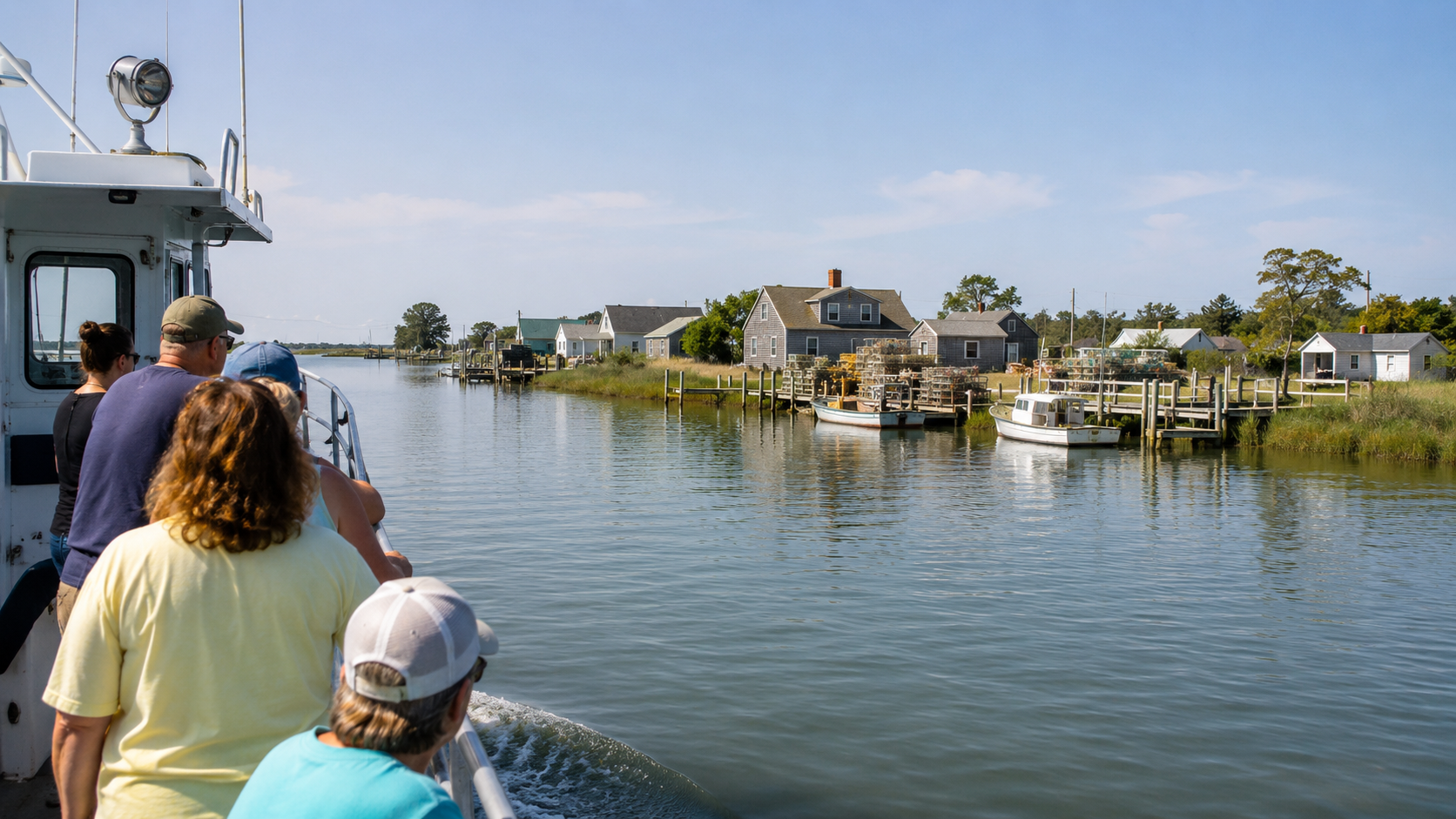
The first thing to understand is that the ferry is the trip. Smith Island sits out in the Chesapeake Bay, and the closest Maryland ferry access is from Crisfield. Most visitors begin at the Crisfield waterfront, where boats leave for the island during the visitor season. The popular day-trip option usually departs around midday, often listed at 12:30 p.m., with a crossing that can feel short on a calm day but still depends on conditions, route, and operator. Some boats serve residents as much as tourists, carrying groceries, supplies, mail, tools, and people who need to get between the island and the mainland. That makes the route feel different from a standard sightseeing cruise. You are not just taking a tour. You are using a lifeline.
The smartest way to plan the day is to treat Crisfield as part of the experience, not only as the departure point. Arrive early enough to park, find the dock, use the restroom, check in, and walk the waterfront before boarding. Crisfield has its own seafood-town character, and rushing through it makes the day feel thinner. A good one-day route starts with a calm morning in Crisfield, a midday boat to Smith Island, a few focused hours on the island, and a return in the late afternoon. That may sound simple, but the mistake many tourists make is trying to turn the island into a checklist. Smith Island is better when you move slowly.
The best season is usually late spring through early fall, when passenger services, restaurants, and visitor activities are more likely to operate. Summer gives the fullest visitor experience, but it can also bring heat, humidity, and busier boats. Late spring and early fall can feel more comfortable, especially if you want soft light, quieter walking, and better conditions for photography. Weather matters more here than in many coastal destinations. Wind, storms, tide, and visibility can affect the comfort of the crossing and sometimes the schedule. Before you drive to Crisfield, confirm the boat time directly with the operator and check whether your chosen restaurant, museum, or tour stop is open that day.
Once you arrive, keep the route realistic. Most day visitors land in or near Ewell, the main visitor-facing community. From there, the Smith Island Cultural Center is one of the most useful first stops because it gives context before you begin walking around. The island’s story is not only scenic. It is about watermen, isolation, changing shorelines, family roots, and a culture that has survived because people adapted to the bay rather than trying to dominate it. After that, leave time for a simple lunch, a slice of Smith Island cake, and a slow walk. If golf carts or bikes are available, they can help, but they are not a replacement for paying attention. The details are small: crab pots, weathered docks, narrow roads, marsh edges, boats, birds, and houses built around a life on the water.
Food is part of the trip, but it should not be treated like a generic seafood stop. Smith Island is strongly connected with crabbing and with its famous multi-layer Smith Island cake, now widely known as Maryland’s state dessert. Many visitors make the mistake of eating too quickly and moving on. A better approach is to build lunch into the core of the day. Order something local if available, ask what is fresh, and save room for cake. The cake is not just dessert for tourists. It is tied to island identity, home kitchens, church events, and the practical tradition of making a dessert that could travel well and serve many people.
The biggest tourist mistake is assuming that Smith Island works like a theme park. It does not. Services can be limited. Hours can change. Cell signal may not be perfect. Transportation is simple. The island is small, lived-in, and fragile. Visitors should stay respectful, avoid walking into private property, keep noise down, and remember that the island is home to residents, not a backdrop for photos. Another mistake is forgetting cash or assuming every place will handle cards smoothly. Bring water, sunscreen, a hat, comfortable shoes, and any essentials you would not want to search for after arrival.
A second mistake is booking the ferry without thinking about the return. On a one-day trip, the return time controls everything. If you miss the boat or misunderstand the schedule, the problem is much bigger than missing a bus in a city. Always know where you need to re-board, what time you need to be there, and whether the boat returns from the same place where it dropped you off. Do not wander too far late in the visit. Keep the final half hour boring on purpose: restroom, cake or souvenir pickup if needed, short walk back to the dock, and a calm wait.
A third mistake is visiting without any interest in the island’s real challenges. Smith Island is beautiful, but it is also vulnerable. Erosion, sea-level rise, aging infrastructure, and population decline are not abstract issues here. You can see how close land and water sit together. A thoughtful day trip should hold both sides at once: the pleasure of the boat ride, seafood, cake, and quiet views, and the reality that this culture depends on a difficult relationship with the bay.
The best Smith Island day trip from Crisfield is not the one with the most stops. It is the one that gives you enough time to understand where you are. Start early in Crisfield, confirm the ferry, pack lightly, cross the bay with patience, eat slowly, visit the cultural center, walk respectfully, and return without rushing. Done this way, Smith Island feels less like a quick excursion and more like a short lesson in Chesapeake life. The island rewards visitors who come prepared, stay curious, and let the place set the pace.