


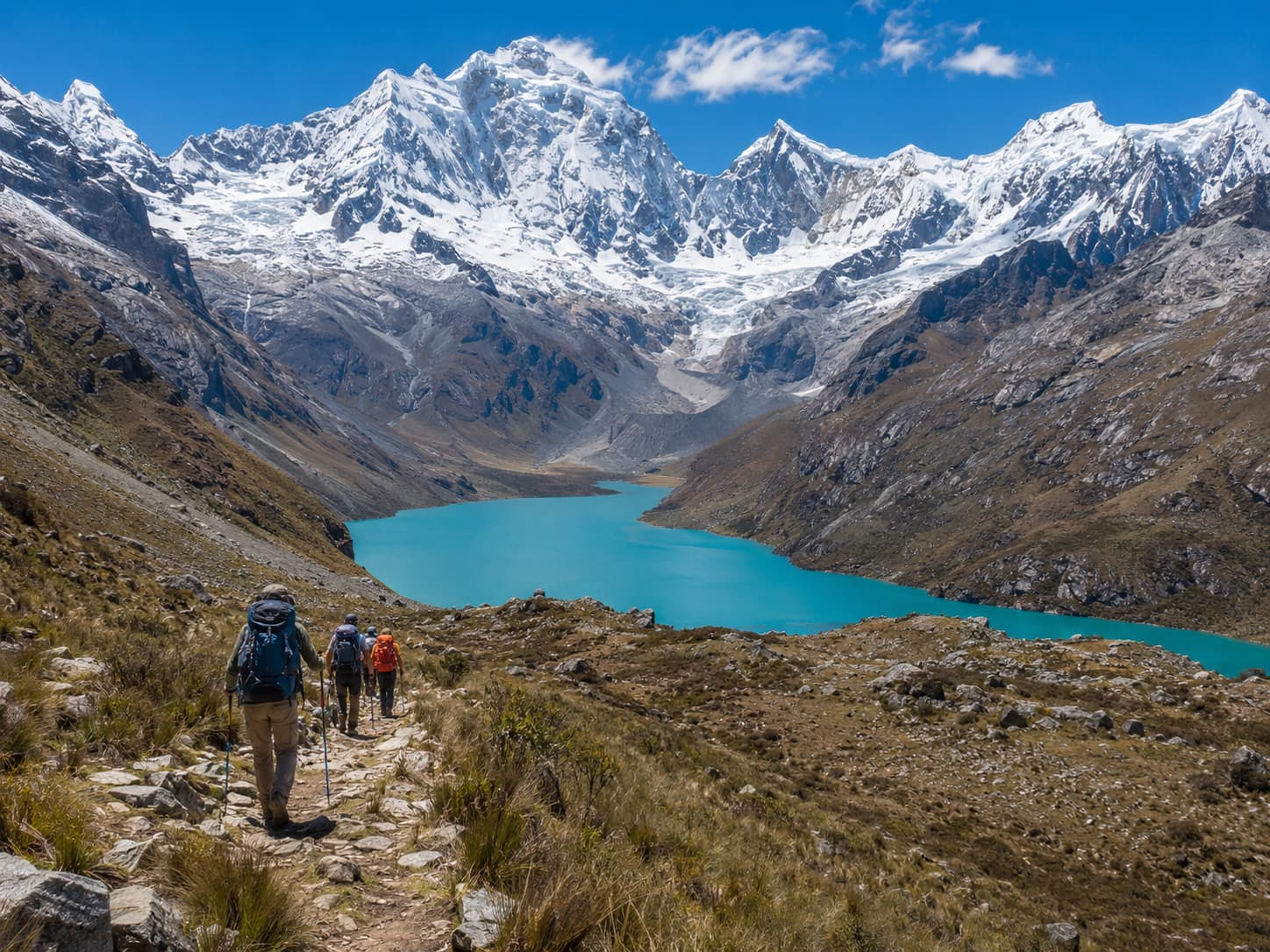
Ask most people about trekking in South America and they will name the Inca Trail, with its permits, its queues, and its months-ahead booking scramble. Ask the people who actually know mountains, and they point north instead, to the Cordillera Blanca, widely reputed to be the finest trekking region on Earth outside the Himalayas.
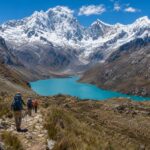
The Santa Cruz Trek is its crown jewel. Over four days you walk through glacier-carved valleys beneath peaks like Alpamayo, Taulliraju, and Artesonraju, the pyramid said to have inspired the Paramount Pictures logo, past impossibly turquoise lakes, and over the dramatic Punta Union Pass at 4,750 meters. And you do it with a fraction of the crowds. It is the kind of deep-nature escape that takes you well beyond the usual tourist map and stays with you for years.
The trek is based out of Huaraz, and how you experience it depends on your fitness, your time, and, above all, how well you prepare for the altitude.
A few things make or break the trip. Acclimatization is the single most important factor, because up here the challenge is thin air, not technical skill. A reputable operator handles the guide, cook, mules, and park logistics so you can focus on walking. Small groups keep it personal, and good cardio fitness makes the passes bearable. Here are the best ways to experience it, ranked from warm-up to the big crossing and beyond.
1. Compare and Book It All in One Place
The Santa Cruz region has acclimatization hikes, the main trek, longer circuits, and cultural add-ons, run by a wide range of operators of varying quality. Sorting that from home, and telling a safe, well-run outfit from a cheap one, is tricky. Santa Cruz Trek Peru is a platform built around this destination, so instead of guessing you get the options laid out clearly by difficulty, length, and what each includes.
The value is that it matches the trip to your fitness and time, and helps you avoid the classic mistake of underestimating the altitude. You can weigh a group departure against a private trek, see what is included, from mules to park fees, and book a reputable operator with proper guides.
You can compare Santa Cruz treks and Huaraz hikes here and plan properly before you go, which matters a great deal at this elevation.
Best for anyone who wants a safe, well-organized trip without the guesswork. If you already know your operator, book directly.
2. Acclimatize First: Laguna 69 and the Huaraz Day Hikes
Do not skip this, ever. Before the multi-day trek, you need at least two or three days in Huaraz, which sits around 3,050 meters, letting your body adjust while you tackle day hikes. The best of these is Laguna 69, a strenuous climb to a jaw-dropping turquoise lake at 4,600 meters ringed by snow peaks. Laguna Churup and the drive-in Laguna Parón are excellent options too.
These are not just preparation, they are spectacular in their own right, and many people rate Laguna 69 as a highlight of the whole trip. The rule of thumb is simple: if you can handle the Laguna 69 day hike comfortably, you are ready for Punta Union.
The altitude bites even on these day trips, so take them seriously and go slowly.
Best for everyone, without exception. This is the foundation the whole trek is built on.
3. The Main Event: The 4-Day Santa Cruz Trek
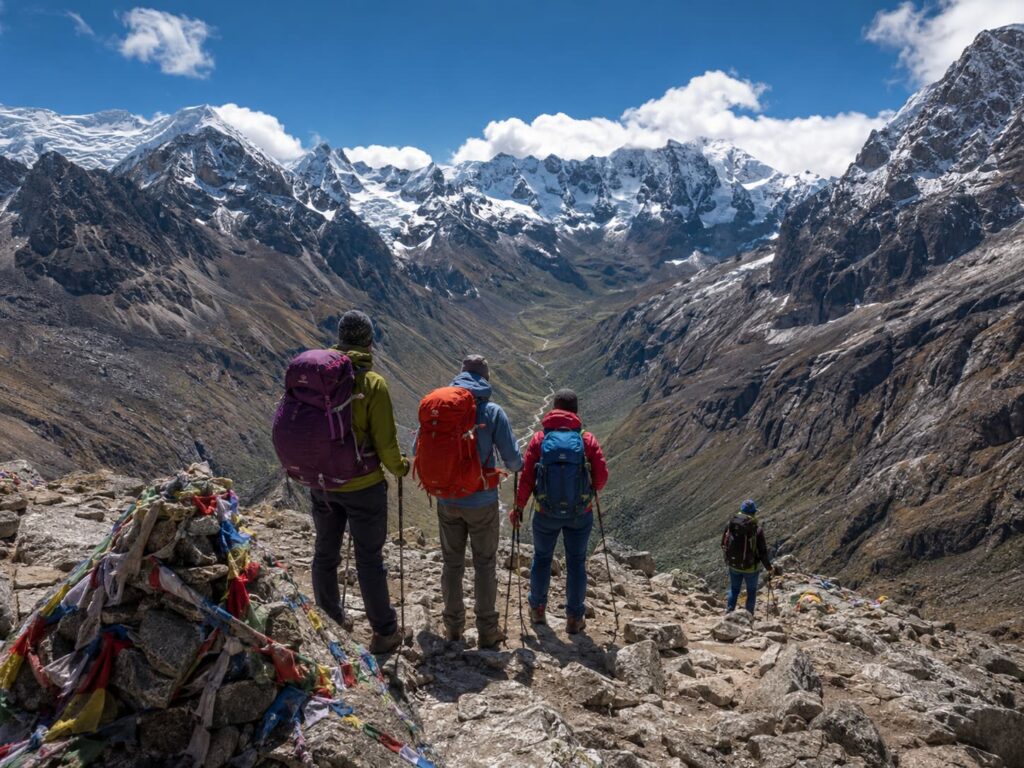
This is the reason you came. The classic four-day, three-night route covers roughly 50 kilometers through the heart of Huascarán National Park, starting at Cashapampa and climbing gradually up the Santa Cruz valley past turquoise lakes to camps beneath the giants. The centerpiece is the zig-zag ascent to Punta Union Pass at 4,750 meters, where the view of the surrounding white peaks is simply staggering.
It is a moderate to challenging trek rather than a technical climb, so you do not need mountaineering skills, but you do need solid fitness and proper acclimatization for the steep ascents, long descents, and thin air. Nights are spent camping under some of the clearest star-filled skies anywhere.
The camps are basic and the weather swings from t-shirt sun to freezing nights, so come prepared for extremes.
Best for reasonably fit hikers who want a world-class multi-day trek without needing to be a mountaineer.
4. Go Bigger: The Huayhuash Circuit
If the Santa Cruz Trek leaves you wanting more, the neighboring Cordillera Huayhuash is the next level. This legendary circuit, typically eight to twelve days, is remote, tougher, and even more spectacular, a genuine expedition through some of the most dramatic mountain scenery on the planet.
This is for experienced trekkers who already have altitude and multi-day trekking under their belts. It rewards the effort with raw wilderness and near-total solitude.
It demands serious fitness, time, and commitment, and it is not a first trek. But for those ready, it is unforgettable.
Best for seasoned hikers chasing the ultimate Andean challenge.
5. Beyond the Trail: Chavín de Huántar and Hot Springs
Not every day needs to be spent climbing. Around Huaraz there is real culture and rest to be found. Chavín de Huántar, about three hours away, is a UNESCO-listed stone temple complex around 3,000 years old, predating the Inca and offering the historical soul to a nature-focused trip. Afterward, the region’s natural hot springs are the perfect balm for trek-weary legs.
Huaraz itself is a lively adventure town with good markets for alpaca gear and local treats like manjar blanco. A rest day here is time well spent.
There is less raw adventure in these outings, but they round out the trip and give your body a break.
Best for travelers who want history and recovery alongside the hiking.
A Few Practical Things Before You Go
Acclimatize, acclimatize, acclimatize. Spend two or three days in Huaraz doing day hikes before the trek, because altitude sickness is the real risk here, with headaches, nausea, and fatigue that can end a trip early. The NHS guide to altitude sickness is a clear, sensible reference for what to watch for.
Time it for the dry season, May to October, with June through August the driest and most reliable. Go with a reputable operator, and remember the Huascarán National Park entrance fee is often not included in the base price. You do not need technical skills, but you do need good cardiovascular fitness.
Pack for extremes: warm layers and a proper sleeping bag for freezing nights, rain gear, sturdy boots, and serious sun protection, because the high-altitude UV is intense. Getting to Huaraz means a scenic drive of around eight hours from Lima, or a short domestic flight. For planning the wider trip, the official Peru tourism site is a great start, and it pairs well with any related travel guides already on the site.
Choosing the Right One for You
The Cordillera Blanca rewards hikers who prepare and match the trip to their level.
Start by comparing your options through Santa Cruz Trek Peru so you get a safe operator and the right route. Whatever you do, acclimatize first with Laguna 69 and the day hikes. Ready for the main event, take the four-day Santa Cruz Trek. Craving something bigger, tackle the Huayhuash. Want history and recovery, visit Chavín and the hot springs.
However you do it, this is one of those trips worth telling people about. If you have ever wanted to share an adventure that genuinely earns the word, standing on the Punta Union Pass with the white peaks all around you is exactly that.
Author note: recommendations here are based on the Cordillera Blanca’s established routes and reputable operators. Prices, seasons, and park fees change, and altitude affects everyone differently, so confirm the current details and prepare properly before you go.